cosmos.wikisort.org - Spacecraft
SAPPHIRE (Stanford AudioPhonic PHotographic IR Experiment, also called Navy-OSCAR 45) was a satellite built by the Stanford University students in Palo Alto, California.[1]
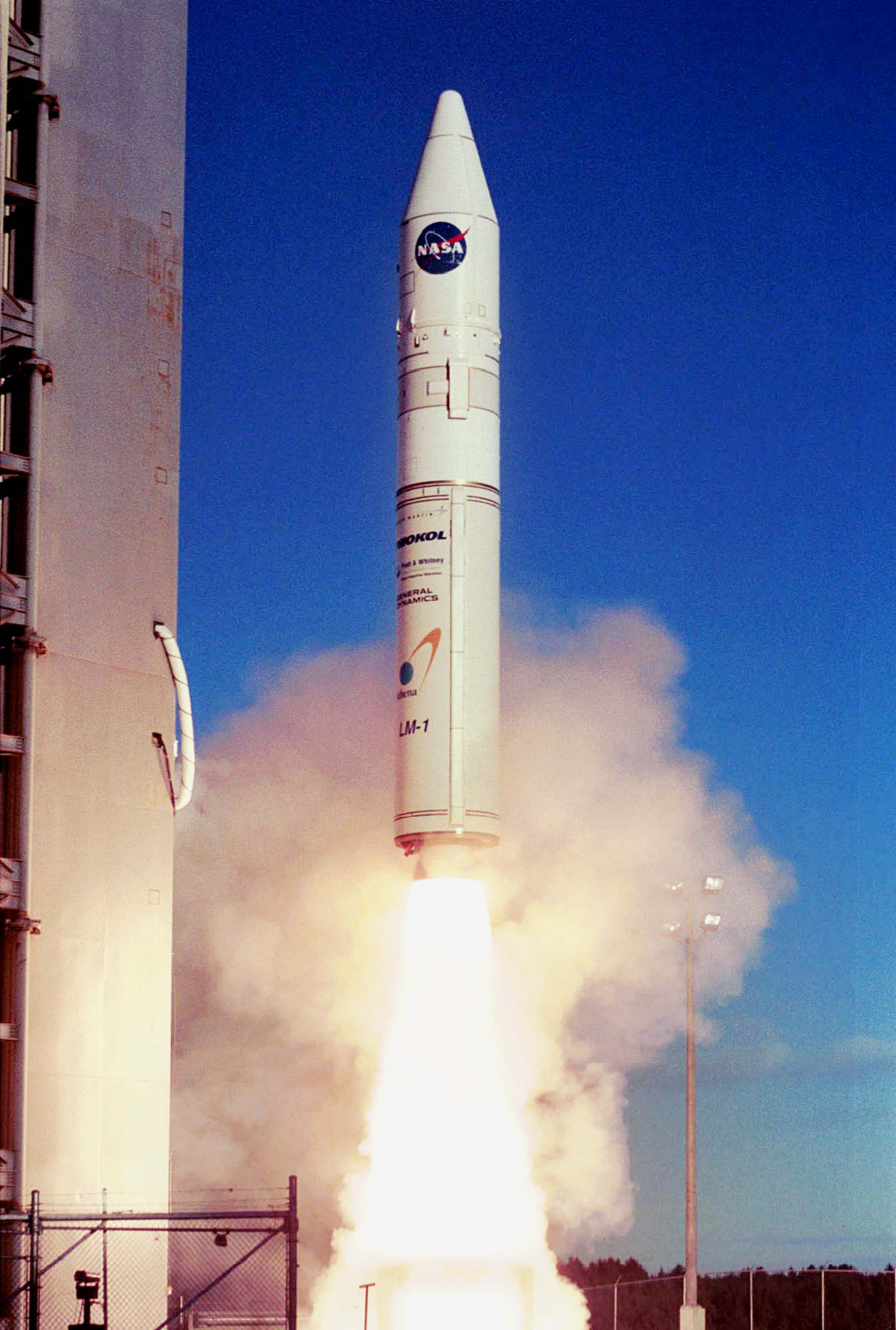
 SAPPHIRE satellite | |
| Mission type | Communications |
|---|---|
| Operator | USNA / University of Santa Clara |
| COSPAR ID | 2001-043D[1] |
| SATCAT no. | 26932 |
| Mission duration | 2 years and 6 months |
| Spacecraft properties | |
| Manufacturer | Stanford University |
| Launch mass | 16 kg (35 lb) |
| Start of mission | |
| Launch date | 30 September 2001, 02:40 UTC |
| Rocket | Athena 1 LM-001 |
| Launch site | Kodiak LP-1 |
| Contractor | Lockheed Martin |
| End of mission | |
| Disposal | Decommissioned |
| Last contact | 2005 |
| Orbital parameters | |
| Reference system | Geocentric |
| Regime | Low Earth |
| Eccentricity | 0.0[1] |
| Altitude | 794 km (493 mi)[1] |
| Inclination | 67°[1] |
| Period | 101 minutes[1] |
| Epoch | 30 Sep 2001[1] |
OSCAR | |
The satellite was launched on September 30, 2001 together with Starshine 3, PICOSat and PCSat on an Athena 1 rocket at the Kodiak Launch Complex, Alaska, United States.
Its purpose was the training of students, the operation of an infrared sensor, a digital camera, a speech synthesizer and from 2002 the operation of an APRS digipeater.[2] He also served to train midshipmen of the US Naval Academy in the field of satellite control.
The satellite's mission ended in early 2005.
Frequencies
- Uplink: 145.945 MHz
- Downlink: 437.1 MHz
- Mode: 1200 bit/s AFSK
- Call sign: KE6QMD[3]
See also

- OSCAR
External links
References
- NASA Goddard Space Flight Center. "SAPPHIRE". Retrieved February 15, 2020.
- "SAPPHIRE (Stanford AudioPhonic Photographic IR Experiment)". eoportal.org. Retrieved 15 Feb 2020.
- n2yo.com. "SAPPHIRE". Retrieved 15 Feb 2020.
OSCAR satellites | ||
|---|---|---|
| Satellites |
|  |
 | This article related to amateur radio is a stub. You can help Wikipedia by expanding it. |
На других языках
[de] SAPPHIRE
SAPPHIRE (Stanford AudioPhonic PHotographic IR Experiment, auch Navy-OSCAR 45) war ein Studentensatellit der Stanford University.[3]- [en] SAPPHIRE
[es] Sapphire
Sapphire es un satélite artificial patrocinado en parte por el Departamento de Defensa de los Estados Unidos. Fue lanzado el 30 de septiembre de 2001 mediante un cohete Athena desde la base de lanzamiento de Kodiak, en Alaska.Текст в блоке "Читать" взят с сайта "Википедия" и доступен по лицензии Creative Commons Attribution-ShareAlike; в отдельных случаях могут действовать дополнительные условия.
Другой контент может иметь иную лицензию. Перед использованием материалов сайта WikiSort.org внимательно изучите правила лицензирования конкретных элементов наполнения сайта.
Другой контент может иметь иную лицензию. Перед использованием материалов сайта WikiSort.org внимательно изучите правила лицензирования конкретных элементов наполнения сайта.
2019-2026
WikiSort.org - проект по пересортировке и дополнению контента Википедии
WikiSort.org - проект по пересортировке и дополнению контента Википедии