cosmos.wikisort.org - Spacecraft
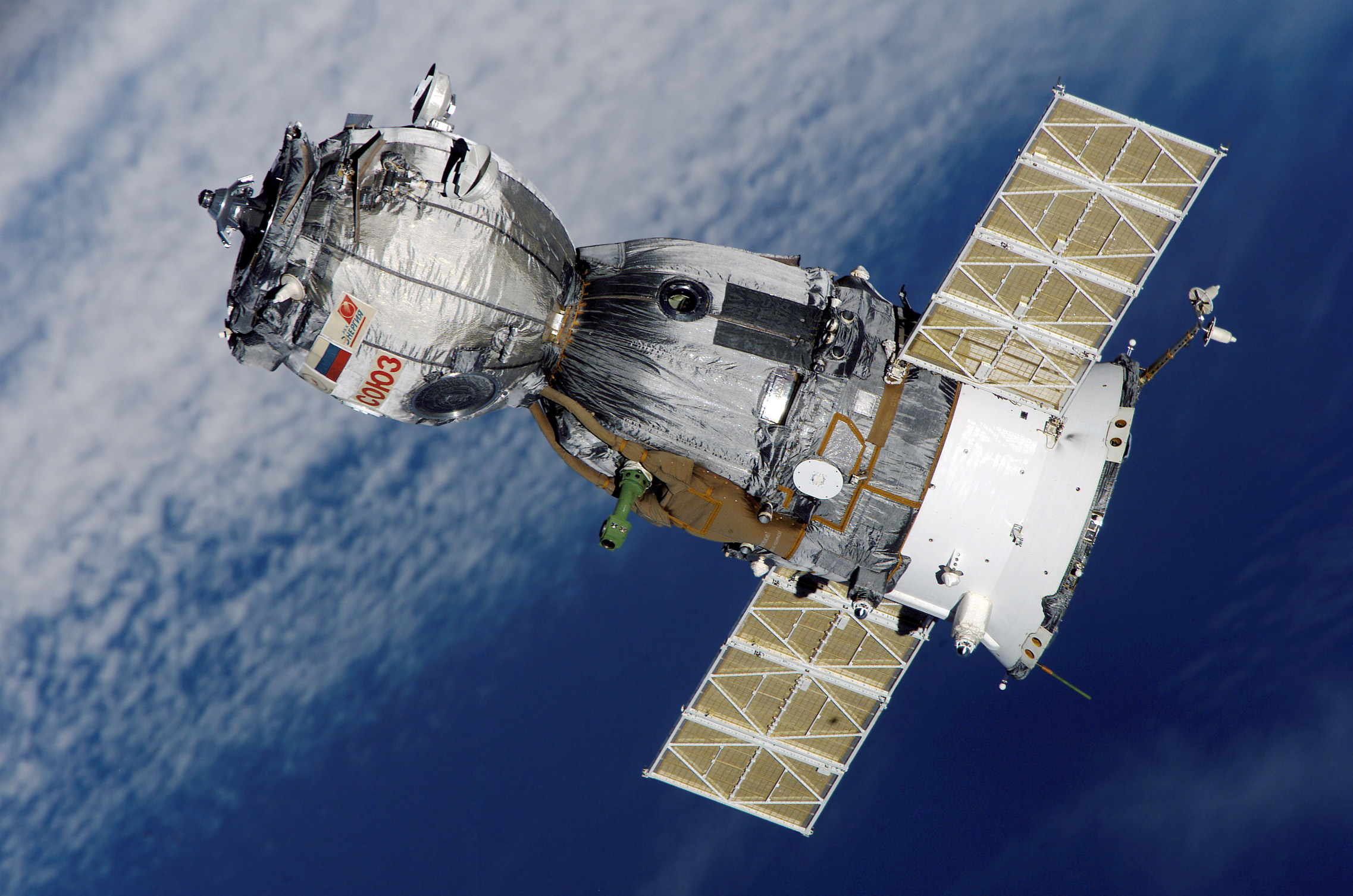
Soyuz MS-08 was a Soyuz spaceflight that launched on 21 March 2018.[3] It transported three members of the Expedition 55 crew to the International Space Station.[3] MS-08 was the 137th flight of a Soyuz spacecraft. The crew consisted of a Russian commander, and two American flight engineers.
 Soyuz MS-08 spacecraft | |
| Operator | Roskosmos |
|---|---|
| COSPAR ID | 2018-026A |
| SATCAT no. | 43238 |
| Mission duration | 196d 18h 1m |
| Spacecraft properties | |
| Spacecraft type | Soyuz-MS 11F747 |
| Manufacturer | RKK Energia |
| Launch mass | 7,220 |
| Crew | |
| Crew size | 3 |
| Members | Oleg Artemyev Andrew J. Feustel Richard R. Arnold[1] |
| Callsign | Hawaii |
| Start of mission | |
| Launch date | 21 March 2018, 17:44 UTC[2] |
| Rocket | Soyuz-FG |
| Launch site | Baikonur Pad 1/5 |
| End of mission | |
| Landing date | 4 October 2018, 11:45 UTC |
| Landing site | Kazakhstan |
| Orbital parameters | |
| Reference system | Geocentric |
| Regime | Low Earth |
| Docking with ISS | |
| Docking port | Poisk zenith |
| Docking date | 23 March 2018, 20:40 UTC[3] |
| Undocking date | 4 October 2018, 07:57 UTC |
| Time docked | 194d 11h 17m |
 (l-r) Arnold, Artemyev and Feustel Soyuz programme (Crewed missions) | |

MS-08 returned its crew to Earth on 4 October 2018.[4]
Crew
| Position | Crew member | |
|---|---|---|
| Commander |  Oleg Artemyev, RSA Oleg Artemyev, RSAExpedition 55 Second spaceflight | |
| Flight Engineer 1 |  Andrew J. Feustel, NASA Andrew J. Feustel, NASAExpedition 55 Third spaceflight | |
| Flight Engineer 2 | Richard R. Arnold, NASA Expedition 55 Second and last spaceflight | |
Backup crew
| Position | Crew member | |
|---|---|---|
| Commander | Aleksey Ovchinin, RSA | |
| Flight Engineer 1 | Nick Hague, NASA | |
References

- "NASA Announces Upcoming International Space Station Crew Assignments". NASA. 28 March 2017. Retrieved 1 April 2017.
- "Soyuz MS-08 mission, first crew launch of 2018, docks with ISS". 21 March 2018.
- Soyuz MS-08 mission, first crew launch of 2018, docks with ISS
- "Soyuz MS-08 returns station crew to Earth after 197 days in space". collectspace.
- Next Soyuz squads
- "Экипаж "Союза МС-08" начал тренировки на Байконуре". 5 March 2018.
Soyuz programme | |||||||||||||||||||||||||||
|---|---|---|---|---|---|---|---|---|---|---|---|---|---|---|---|---|---|---|---|---|---|---|---|---|---|---|---|
| |||||||||||||||||||||||||||
| Main topics |
|  | |||||||||||||||||||||||||
| Past missions (by spacecraft type) |
| ||||||||||||||||||||||||||
| Current missions |
| ||||||||||||||||||||||||||
| Future missions |
| ||||||||||||||||||||||||||
Uncrewed missions are designated as Kosmos instead of Soyuz; exceptions are noted "(uncrewed)". The † sign designates failed missions. Italics designates cancelled missions. | |||||||||||||||||||||||||||
Human spaceflights to the International Space Station | ||
|---|---|---|
See also: {{ISS expeditions}}, {{Uncrewed ISS flights}} | ||
| 1998–2004 |
|   |
| 2005–2009 | ||
| 2010–2014 | ||
| 2015–2019 |
| |
| Since 2020 |
| |
| Future |
| |
| Individuals |
| |
| Vehicles |
| |
| ||
 | This article about one or more spacecraft of the Russian Federation is a stub. You can help Wikipedia by expanding it. |
На других языках
- [en] Soyuz MS-08
[ru] Союз МС-08
«Союз МС-08» — российский транспортный пилотируемый космический корабль, старт которого состоялся 21 марта 2018 года[3] с космодрома Байконур. После двухсуточной схемы сближения корабль пристыковался к международной космической станции 23 марта, участники экспедиции МКС-55/ 56 перешли на борт МКС[4]. Это 135-й пилотируемый полёт корабля «Союз», первый полёт которого состоялся в 1967 году.Текст в блоке "Читать" взят с сайта "Википедия" и доступен по лицензии Creative Commons Attribution-ShareAlike; в отдельных случаях могут действовать дополнительные условия.
Другой контент может иметь иную лицензию. Перед использованием материалов сайта WikiSort.org внимательно изучите правила лицензирования конкретных элементов наполнения сайта.
Другой контент может иметь иную лицензию. Перед использованием материалов сайта WikiSort.org внимательно изучите правила лицензирования конкретных элементов наполнения сайта.
2019-2026
WikiSort.org - проект по пересортировке и дополнению контента Википедии
WikiSort.org - проект по пересортировке и дополнению контента Википедии